If you have exhausted funds from scholarships, grants, and college savings, know that there are still ways to help cover the costs of your education. Federal Direct PLUS loans, private student loans, and lines of credit are available to fill the financial gaps. Here’s a plain-English guide to understanding PLUS loans, private student loans, and education lines of credit: the differences, the new rules, and how to pick what’s best for your circumstances.
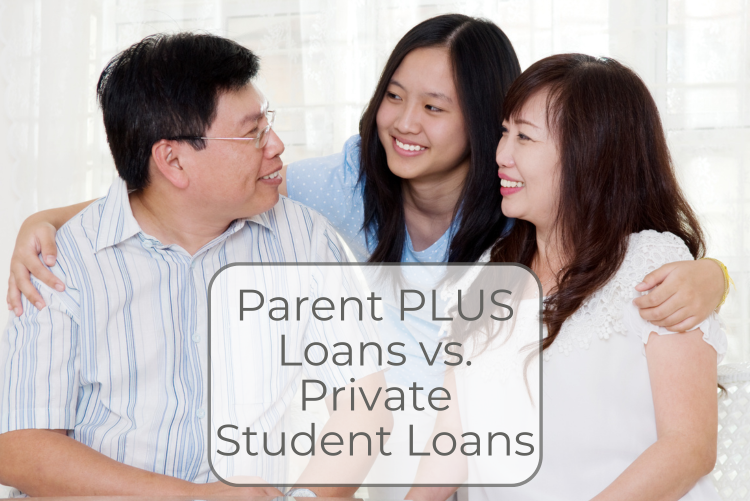
Parent PLUS Loans
Federal PLUS loans are loans made by the U.S. Department of Education to help pay for college when you’re unable to make ends meet with available financial aid.
Parents may apply for a Parent PLUS loan to help pay for the student’s undergraduate education. This particular loan cannot be transferred to the child and parent borrowers are legally responsible for repaying the loan.
Note: A Grad PLUS loan is a loan taken out by a graduate student for their graduate education (such as a master’s or doctorate program). Big changes will be coming to this program in 2026.
Pros
When it comes to PLUS loans, you can expect predictable, fixed federal interest rates. The eligibility for these loans is not tied to the student’s credit, and although credit history does matter for Parent PLUS loans, there is no required income threshold. PLUS loans offer options for deferment, forbearance, and income-driven repayment.
Cons
Unfortunately, the interest rates and origination fees (a one-time charge lenders require to cover the administrative costs of processing the loan) may be higher than private loans–even for borrowers who are well-qualified.
Starting July 1, 2026, the One Big Beautiful Bill Act will place limits on new Parent PLUS borrowers. Parents could previously borrow up to the school’s full cost of attendance (minus any other aid) with a Parent PLUS loan. Starting July 1, 2026, new Parent PLUS loans will be limited to $20,000 per year, with a $65,000 lifetime cap per student.
Private Student Loans
Banks, credit unions, or online lenders offer private student loans to students that are typically based on the borrower’s credit and income. While federal loans follow rules set by the federal government, private lenders do not have the same set of rules and regulations, allowing each lender to set their own interest rates, terms, and repayment plans.
Pros
Private loans may offer lower rates for applicants with excellent credit, or those who have cosigners with strong credit. Private loans may offer benefits such as:
- Fixed and/or variable rates
- Rate discounts when enrolled in autopay
- A variety of repayment terms
Most also cover up to the full cost of attendance (minus other financial aid).
Because every lender is different, it’s a good idea to shop around for the best rates and terms for your personal situation. Credit unions may have more favorable rates and terms than some big-name financial institutions.
Cons
Private student loans do not come with the same benefits as federal loans, such as public service or other forgiveness options. If your credit isn’t the best, the interest rates offered can be higher. Ultimately, the terms and fees will vary by lender.
Education Lines of Credit
An education line of credit is a type of private student loan that is more flexible – providing you access to a predetermined amount of money that helps prevent overborrowing. Unlike traditional student loans that give you the funds all at once, education lines of credit allow you to access money only when you need it for tuition, books, or other school expenses. You only pay interest on the amount of money that is actually used.
Additionally, you only need to apply one time for your entire undergraduate or graduate degree!* In future years, you simply complete a “draw” to access the amount you need.
Making the decision to borrow
Use these questions to help decide what option will work best for you and your circumstance:
1. Who is the borrower?
If a parent is footing the bill, compare Parent PLUS loans with private loans–keeping in mind that the 2026 federal options are changing in July.
2. What is total cost going to be?
Remember the cost of the loan isn’t only the cost you’re looking to borrow and if you need a lump sum, or more of a fill-in-the-gap kind of financial help. Keep in mind the interest rate, the origination fees, and if the rate is going to be fixed or variable. Search for a loan calculator to compare the prices over the potential life of the loan.
3. What protections do you need?
Federal loans give you access to income-driven repayment plans, forgiveness plans, and forbearance, as private loans do not have access to traditional federal assistance programs. If you believe you may want or need access to these plans and programs, taking out a federal loan may be in your best interest.
4. Does a private lender give me better rates? If you are able to qualify for available low private rates, take a look a private lenders such as credit unions. Make sure to look at the numbers and read the fine print, such as options for cosigner release, repayment flexibility, and fees.
Finances are as unique as students’ educational journeys. Federal PLUS loans can give borrowers access to programs and plans unavailable via private financial institutions, but private loans may be able to save you money with good credit.
Be sure to stay up to date on how federal policy could impact your borrowing in 2026 and beyond, and investigate options for private student loan options like the education line of credit available from our credit union lenders. Use our finder tool to quickly compare options with no impact on your credit score.
*Subject to annual review and credit qualification. Must meet school’s Satisfactory Academic Progress (SAP) requirements