On July 14, 2025, the U.S. Supreme Court allowed the federal government to proceed with laying off roughly 1,300 employees at the U.S. Department of Education, about one-third of its workforce. This decision removed a previous injunction and is part of a broader plan to restructure and significantly reduce the size of the Department, which currently employs around 4,100 people.
While reactions have been mixed and often politicized, it’s important to pause and assess what these changes might mean for students, parents, and anyone planning how to pay for college.
Why This Matters to Students and Families
The Department of Education oversees federal student aid programs, including Pell Grants, work-study, and federal student loans. A staffing reduction of this scale could bring changes in how these services are delivered.
Potential Challenges:
- Longer Processing Times: With fewer staff, families might experience delays in FAFSA processing, loan disbursements, or other federal aid functions.
- Uncertain Program Administration: Some proposed changes include moving student loan servicing outside the Department and consolidating or shifting responsibilities. These ideas, while still in development, introduce uncertainty around how aid programs will function in the near term.
- Reduced Support Availability: Fewer employees may mean slower response times for borrowers needing assistance.
What Might Be Overlooked (The Potential Upside)
Change (especially at this scale) can create uncertainty, but it can also force innovation and drive improvement.
- Rethinking Federal Aid Infrastructure: Advocates of the reorganization argue that modernizing how student loans are serviced and simplifying aid processes could ultimately lead to better borrower experiences.
- Increased Role for States and Schools: These changes may prompt states, public institutions, and even local financial institutions to step up with more direct support for students, potentially creating more tailored or responsive programs.
- A Push for Financial Literacy: As the federal system becomes less centralized, students and families may be encouraged to take greater ownership of their college financing, which could lead to lower defaults and better long-term outcomes.
What You Can Do Right Now
While the impact of these staff cuts won’t be immediate, the uncertainty means students and families should stay ahead of the curve:
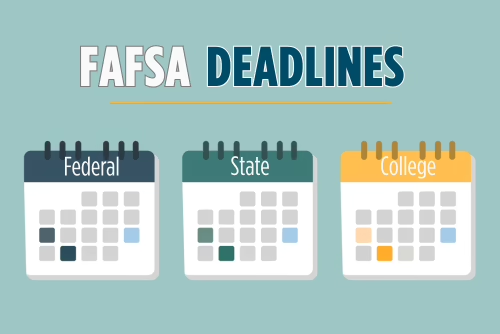
- Start Federal Aid Applications Early: Submit your FAFSA as soon as it opens (on or before December 1st, 2025). With fewer staff, early filers will likely avoid bottlenecks later in the season.
- Double-Check Application Accuracy: Mistakes or incomplete documentation may take longer to resolve, so pay close attention during the submission process.
- Plan for Flexibility: Build a financial safety net or consider supplemental funding options, such as a flexible education line of credit, in case federal timelines shift.
- Stay Informed: Monitor updates from the Department of Education and credible news outlets. Program rules and deadlines may change, and knowing what’s coming helps you prepare accordingly.
Final Thoughts
This isn’t the first major shake-up in education policy, and it won’t be the last. While the Supreme Court’s ruling introduces some short-term uncertainty, it also opens the door for potential improvements to how student aid is administered in the long run.
For students and families, the most important step is to stay informed, apply early, and keep options open. Whether these changes lead to new frustrations or long-term efficiencies will depend on how the system adapts, and how borrowers respond.
Change is always unsettling, but it’s also how progress happens. What matters most now is preparation and perspective.
Want to compare education line of credit options?
Use the Student Choice finder tool to explore flexible private loan programs from credit unions. It’s fast, free and you can see estimated rates without affecting your credit.