If someone in your household plans to attend college during the 2027–28 academic year, there’s an important item to check off the to-do list: the FAFSA is now open.
The Free Application for Federal Student Aid (FAFSA) is used to determine eligibility for federal financial aid, including grants, work-study and federal student loans. States and colleges also use FAFSA information when awarding their own financial aid. (Not sure if you’ll qualify for financial aid? Review our article, “Why You Should Complete the FAFSA – Even If You Think You Don’t Need To.”)
Here’s what families should know and how to make completing the FAFSA easier.
Why Filing the FAFSA Early Matters
The FAFSA has a federal deadline, but that shouldn’t be your target submission date.
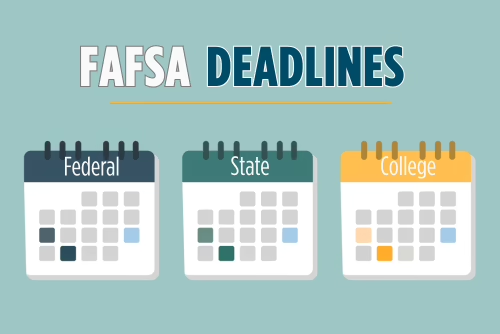
For the 2027–28 school year, the federal FAFSA deadline is June 30, 2028. However, states and colleges may have deadlines much earlier than that, and some financial aid funds are limited. Filing early can help ensure you meet those deadlines and are considered for available aid.
Each state establishes its own deadlines and requirements, and some have limited funds available. Check your state’s FAFSA deadline now and make it a priority. You can find your state’s deadline through the Federal Student Aid website.
And remember: even if you’ve missed your state’s deadline, you should still complete the FAFSA. Missing a state deadline does not make you ineligible for federal student aid.
Don’t Forget Your College’s Deadline
Colleges and universities can have their own FAFSA deadlines, including priority deadlines for institutional financial aid. These may be considerably earlier than the federal deadline.
If your student is applying to multiple schools, check the financial aid deadline for every school on the list. Also look for other financial aid applications a school may require, such as the CSS Profile.
And don’t overlook early admission deadlines. If your student plans to apply Early Action or Early Decision, make sure you understand the school’s admissions deadline and its financial aid requirements. An early admission application doesn’t automatically mean the FAFSA deadline is the same, so check each school’s specific dates.
Top Tips for Completing the FAFSA
The FAFSA may seem intimidating, but being prepared can make the process much easier.
- Create your StudentAid.gov account ahead of time.
You’ll need a StudentAid.gov account to access and submit the FAFSA. If a parent or spouse needs to provide information, they will generally need their own account as well. Make sure everyone is set up before you get started. - Know who needs to contribute.
Depending on your family’s circumstances, a parent or spouse may need to provide information on the FAFSA. If you’re unsure which parent needs to participate, Federal Student Aid offers a tool to help determine the appropriate contributor. Getting everyone involved early can help prevent delays. - Let the FAFSA import your tax information.
The FAFSA can now transfer federal tax information directly into the application, so you may not need to dig out an old tax return before getting started. For the 2027–28 FAFSA, the form uses 2025 tax information. You may still need information about current assets and other financial details, so have those available if requested. - List the schools you’re considering.
Make sure the colleges and career schools you’re interested in receive your FAFSA information. You can include schools you’re considering even if you haven’t been accepted yet. This allows those schools to use your FAFSA information when determining financial aid eligibility. - Read each question carefully.
Take your time and double-check your answers before submitting. Small mistakes can cause delays or require corrections. If you’re unsure about a question, use the help information provided within the FAFSA rather than guessing. - Make sure everyone signs and submits their section.
Completing your portion isn’t necessarily the final step. Required contributors must provide their information, consent and signature before the FAFSA is considered complete. Before you move on, make sure everyone who needs to participate has finished their section. - Keep an eye on your email.
After submitting the FAFSA, watch for communications from Federal Student Aid and the colleges you’re considering. Review your FAFSA Submission Summary when it’s available and check whether any corrections or additional information are needed.
Don’t Let Deadlines Sneak Up on You
Completing the FAFSA is an important first step in planning how you’ll pay for college. The sooner you submit it, the sooner you can move on to the rest of your college and financial aid checklist.
Start by creating your StudentAid.gov account, checking your state and college deadlines, and gathering the information you’ll need. A little preparation now can make the financial aid process much less stressful later.