Classes start in the next couple of weeks. Did you know your student loans might not?
First-time federal student loan borrowers may be subject to a disbursement delay after classes begin, meaning some won’t see their funds until October. That’s a long time to wait when tuition, rent, and book costs are due now.
According to the office of Federal Student Aid:
- If you’re a first-year undergraduate student and a first-time borrower, you may have to wait 30 days after the first day of your enrollment period (semester, trimester, etc.) before your school is allowed to give you your loan money. Check with your school to see whether this rule applies.
- If you’re a first-time borrower of a Direct Subsidized Loan or a Direct Unsubsidized Loan, you must complete entrance counseling before your school can give you your loan money.
Your Last-Week Financial Aid Reality Check
Before you panic, run through this five-step checklist to avoid costly surprises and missed deadlines.
1. Verify Your Enrollment Status
Even small errors in your enrollment status can trigger loan repayment requirements or halt disbursements—even if you’re attending full-time. Log into your student portal today and confirm that your registered credit hours match what’s listed on your financial aid application.
2. Check the Half-Time Threshold
To qualify for most federal and private student loans, you must maintain at least half-time enrollment—typically six credit hours for undergraduates. Dropping below this can delay or cancel your loan disbursement.
3. Calculate Your Actual Funding Gap
Add up tuition, fees, books, and living expenses for the first month. Subtract confirmed aid from grants, scholarships, and loans. The result is your immediate funding gap—the amount you must cover before federal aid arrives.
4. Review Disbursement Dates for Late-Start Classes
If you’re taking late-start courses (e.g., an October chemistry lab), your aid tied to those credits may not disburse until the course begins. That late October start date won’t help you pay September rent.
5. FAFSA Verification Completion
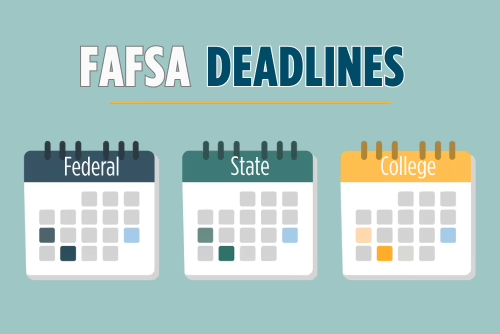
If your school notified you that you were selected for FAFSA verification, incomplete documents can freeze your entire aid package. The verification deadline is strict, and missing paperwork means zero funding until every thing is resolved.
When Federal Aid Falls Short
Federal loans are a strong foundation, but their timing doesn’t always align with real-life expenses. When you can’t afford to wait, private student loan solutions from credit unions can help.
Unlike many big bank loans, student loans from credit unions often:
- Process faster (though they are still dependent on certification from your school’s financial aid office)
- Come in the form of an education line of credit, which allows you to borrow what you need, when you need it – without having to reapply every year.*
- Have lower rates and better member service because credit unions are not-for-profit institutions. This can mean real savings and fewer surprises.
The Credit Union Advantage
Through the Student Choice finder tool, you can quickly and easily:
- Be matched with leading credit unions you are eligible to join
- Compare real rates and terms without affecting your credit score
- Access funding through a flexible line of credit—one application for up to four years*
Smart Borrowing for the Time Crunch
Private loans should serve as gap fillers, not primary funding. Use them strategically to bridge the delay between federal aid and actual expenses, and adjust as funds arrive.
The key takeaway? Time matters. Don’t let red tape derail your education plans. Compare student loan options now, so your semester starts on time—financially and academically.
Estimate your rate with no credit impact and see why thousands of families choose credit unions for smarter student loans.
*Subject to annual review and credit qualification. Must meet school’s Satisfactory Academic Progress (SAP) requirements.