You did the smart thing. A couple of years ago, you refinanced your student loans, locked in what felt like a solid rate, and moved on with your life. (Maybe you even celebrated a little. You earned it.)
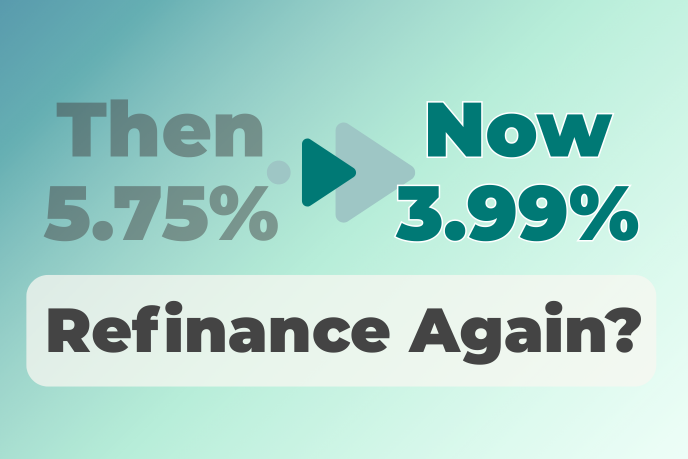
But here’s the thing about “solid” rates: they have a shelf life. If you refinanced in 2023 or 2024, there’s a decent chance you refinanced with a rate somewhere between 5% and 7%. At the time, that was a win. Rates were climbing, the Fed was in tightening mode, and getting below 7% felt like a small miracle. Fast forward to today. Private student loan refinancing rates have dropped meaningfully since then, with fixed rates starting as low as 3.99% APR for well-qualified borrowers. That gap between what you’re paying and what’s available right now? It could be costing you thousands of dollars over the life of your loan.
So let’s talk about something most people don’t realize is an option: refinancing a loan you’ve already refinanced. Yes, really. It’s called re-refinancing, and it might be the easiest financial win you’re not taking advantage of.
Yes, You Can Refinance a Refinanced Loan
This is the most common misconception in student loan refinancing, and it stops people from saving real money every single day. There is no rule that limits how many times you can refinance a student loan. Once you’ve refinanced, that loan is a private loan. And private loans can be refinanced again whenever the math makes sense.
Think of it like mortgage refinancing. Homeowners don’t refinance once and call it a lifetime. When rates drop, they refi again. Student loans work exactly the same way.
No lender will penalize you for shopping around. Most private lenders charge zero origination fees and zero prepayment penalties on refinanced loans. That means there’s typically no financial cost to making the switch, only the time it takes to apply and the brief credit inquiry. And about that credit check: most lenders now offer prequalification through a soft credit pull, which means you can see your estimated rate without any impact on your credit score. There’s genuinely no downside to checking.
When Re-Refinancing Saves Real Money (the Rate Drop Math)
Let’s run the numbers, because this is where the conversation gets interesting.
Say you refinanced $40,000 in student loans two years ago at 5.75% on a 10-year term. Your monthly payment is around $438, and over the remaining 8 years, you’ll pay roughly $6,100 in interest.
Now imagine you re-refinance that remaining balance (approximately $33,000) at 4.25% for 8 years. Your new monthly payment drops to about $410, and you’ll pay roughly $4,200 in total interest. That’s a savings of around $1,900, just for filling out an application.
Bump that original balance up to $60,000? The savings climb past $3,000. At $80,000, you’re looking at real money, potentially $4,000 to $5,000 back in your pocket over the life of the loan.
Here’s the rough rule of thumb: a 1% rate drop on a $40,000 balance saves you approximately $1,800 to $2,200 over the remaining term. The higher your balance and the bigger the rate gap, the more dramatic the savings. And if you’re carrying six figures in refinanced student debt (which is more common than people think, especially among graduate degree holders), even a modest rate improvement translates to thousands.
And it’s not just about the rate. Sometimes the term you chose a couple of years ago is no longer the right fit. Maybe you were aggressive and picked a 5-year term, but now you’d rather have some breathing room with a 10-year term and a lower monthly payment. Or maybe you’re earning more and want to shorten your timeline. Re-refinancing lets you reset the terms to match where your life is today, not where it was in 2023. Want to see where you’d land? Check today’s rates to get a personalized estimate.
When It’s Not Worth the Paperwork
Honesty time: re-refinancing isn’t always the right call. Here are a few scenarios where you might want to hold steady:
- The rate difference is less than 0.50%. If you’re currently at 4.75% and the best you can get is 4.50%, you’ll save something, but it might not be enough to justify the effort and if you’re already halfway through your term, the remaining interest just isn’t that significant.
- You’re close to paying off the loan. If you have two years left on a 5-year term, most of your payments are already going to principal. Refinancing at this point shuffles the deck chairs but doesn’t change the ship’s direction much.
- You’d lose something valuable. This applies mainly to borrowers who still hold federal loans and are considering their first refinance (not a re-refi). If you refinance federal loans into a private loan, you give up access to income-driven repayment, Public Service Loan Forgiveness, and federal deferment options. But if you’ve already refinanced once and your loan is already private, and this isn’t a new concern for round two.
- Your credit has taken a hit. If your credit score has dropped since your last refinance, you may not qualify for a better rate. That’s okay. Check back in six months after you’ve had time to rebuild. Life happens, and lenders will still be there when your score recovers.
- You’re pursuing federal loan forgiveness. If you still hold federal loans (not yet refinanced) and are working toward Public Service Loan Forgiveness or another federal program, refinancing those into a private loan would mean giving up that path. With the SAVE plan gone and IDR options narrowing, the calculus on federal vs. private has shifted for many borrowers, but PSLF is still valuable if you qualify. This concern doesn’t apply to loans you’ve already refinanced once (those are already private), but it’s worth mentioning for borrowers with a mixed portfolio.
What to Watch For (Fees, Term Resets, and Credit Impact)
Re-refinancing is straightforward, but there are a few things worth understanding before you sign:
Term resets. This is the biggest one. When you refinance, the clock starts over. If you had 8 years left on a 10-year loan and you refinance into a new 10-year term, you’ve just added 2 years of payments. That can erase some of your interest savings. The fix? Choose a new term that matches (or shortens) your remaining payoff timeline. Most lenders offer flexible term options from 5 to 20 years.
Credit inquiry. As mentioned, prequalification uses a soft pull, but the formal application will trigger a hard inquiry. One hard inquiry typically dings your score by 5 to 10 points temporarily, and it recovers within a few months. If you’re about to apply for a mortgage or car loan, you may want to time this carefully.
No hidden fees (usually). The student loan refinancing market is competitive, and most reputable lenders, especially credit unions, charge no origination fees, no application fees, and no prepayment penalties. If a lender does charge fees, that’s a red flag worth investigating.
Autopay discounts. Many lenders shave 0.25% off your rate when you set up autopay. If you’re not using this, you’re leaving free money on the table. Check whether your current lender and any new lender both offer this.
How to Compare Your Current Rate to What’s Available Today
Ready to see if re-refinancing makes sense? Here’s your five-step playbook.
- Find your current rate and remaining balance. Log in to your lender’s portal and write down your interest rate, remaining balance, remaining term, and monthly payment. This is your baseline.
- Prequalify. Use soft-pull prequalification to see what rates you’d get today. It takes a few minutes per lender, and your score stays untouched. Our search tool makes this easy by letting you compare multiple credit union lenders in one place.
- Run the break-even math. Subtract your potential new rate from your current rate. Multiply the difference by your remaining balance and your remaining years. If the savings are meaningful (anything over $500 is generally worth your time), keep going.
- Watch the term. Match or shorten your remaining payoff timeline unless you intentionally want lower monthly payments. Don’t accidentally extend your loan by years just to get a slightly smaller bill each month, unless that’s exactly what your budget needs right now.
- Apply and close. Once you pick a lender, the formal application takes 15 to 30 minutes. Most lenders handle everything digitally. Your new lender pays off the old one, and you start making payments to the new lender.
The window for historically competitive refinance rates won’t last forever. With the Fed signaling rate stability (and potential shifts ahead), borrowers who act now are in a strong position.
If you locked in a rate two or three years ago and haven’t looked since, you owe it to yourself to check. It costs nothing to look, and the savings could be substantial. The worst thing that happens? You confirm your current rate is still competitive and move on with your day. The best thing? You knock a full percentage point (or more) off your rate and save thousands over the life of your loan. That’s a pretty good risk-reward ratio for 15 minutes of your time.
Check today’s rates to see if re-refinancing makes sense
*Important: Please remember that federal loans do offer certain benefits and protections that do not transfer to a private loan. By refinancing your federal student loans to a private loan you will lose any federal benefits that may apply to you. Please review this important disclosure for more information.
Loans subject to credit approval and additional criteria. Carefully consider whether consolidating your existing student loan debt is the right choice for you. Any reduction in your monthly payment may result from a lower interest rate, a longer repayment term, or both. Extending the loan term could increase the total interest paid over time.