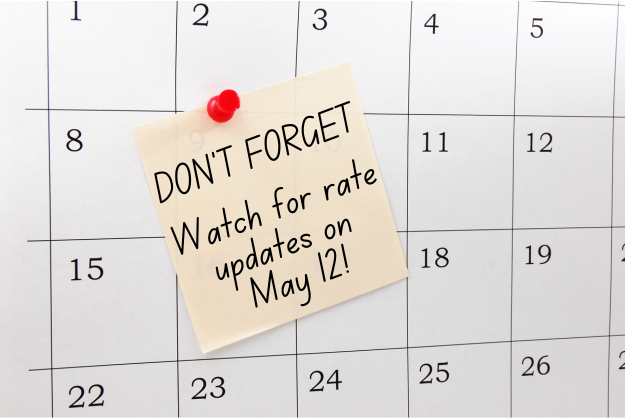
If you’ll be borrowing for college next year, there’s a date you should circle on your calendar: May 12, 2026. That’s when the U.S. Treasury auctions the 10-year note that determines every federal student loan rate for the 2026-27 academic year. One afternoon, one auction, and your borrowing cost is locked in.
The good news: you don’t have to just sit there and accept whatever number lands. The private lending market is currently offering rates that make the federal ones look more like a starting point than a final answer. And for the first time in years, students and families have real leverage in how they structure their borrowing.
Here’s what’s actually happening, what the numbers will probably look like, and the smartest way to use all of it.
What the May 12 Treasury Auction Actually Decides
Every spring, the Department of Education sets the coming year’s federal student loan rates using a formula tied to one event: the May auction of the 10-year Treasury note. The yield from that auction, plus a fixed margin set by Congress, becomes the rate for every federal loan disbursed between July 1, 2026 and June 30, 2027.
The margins are:
- Undergraduate Direct Loans: 10-year Treasury yield + 2.05%
- Graduate Direct Unsubsidized Loans: 10-year Treasury yield + 3.60%
- Parent PLUS Loans: 10-year Treasury yield + 4.60%
Once those rates are set, they’re fixed for the life of every loan originated that year. There’s no negotiation, no credit score discount, and no early-bird rate. A student with an 800 FICO cosigner pays the same rate as someone with no credit history at all.
That uniform pricing is fine if you’re a borrower who couldn’t qualify for credit on your own (which is exactly the situation federal loans were designed for). But if you or your family have strong credit, it means you might be paying more than you need to.
Projected 2026-27 Federal Rates
The projected rates outlined below are based on the May 12, 2026, auction of the 10-Year Treasury Note. The 10-year Treasury yield came in at 4.47%, up from last year’s 4.342%.
- Undergraduate Direct Loans: 6.52% (up from 6.39% in 2025-26)
- Graduate Direct Unsubsidized Loans: 8.07% (up from 7.94%)
- Parent PLUS Loans: 9.07% (up from 8.94%)
How Private Student Loan Rates Compare Right Now
This is where the conversation gets interesting.
Private student loan rates for well-qualified borrowers currently start as low as 2.79% fixed and 4.49% variable. Even borrowers with good (not flawless) credit profiles could see fixed rates in the 4% to 6% range. That’s the same neighborhood as federal undergraduate rates, and meaningfully below federal grad and PLUS rates.
The catch: private rates are credit-based. Your rate depends on your credit score, income, debt-to-income ratio, and the lender you choose. Not everyone qualifies for the headline numbers. But the gap between federal rates and what a creditworthy borrower can find privately is wide enough that it’s worth checking, even if you assume you’ll land somewhere in the middle of the range.
The OBBB Factor: New Limits That Change the Borrowing Equation
If you haven’t been following the One Big Beautiful Bill Act closely, here’s the short version: starting July 1, 2026, federal student lending looks noticeably different.
For graduate students: Grad PLUS loans are being eliminated for new borrowers this year. Graduate students can borrow up to $20,500 per year in Direct Unsubsidized Loans (or $50,000 for qualifying professional programs), but there’s no longer a federal option to borrow up to the full cost of attendance. If your program costs more than federal limits cover, you’ll need a private loan, a line of credit, or a generous scholarship to fill the gap.
For parents: Parent PLUS loans are now capped at $20,000 per year with a $65,000 lifetime limit per student. That’s a significant reduction from the old rules, which let parents borrow up to the full cost of attendance with no ceiling.
For everyone: The new lifetime aggregate cap across all federal loans is $257,500. Repayment will be narrowed to Standard Repayment and the new Repayment Assistance Plan (RAP). The SAVE plan is gone, and PAYE and ICR are being phased out.
What all of this means for borrowers making decisions right now: federal loans alone may not cover your costs. And even when they do, the rate you’re paying on federal loans may not be the best rate available to you. The days of “just take the federal loans and don’t think about it” are over for a lot of families. If your financial aid package comes up short, knowing what private rates look like is no longer optional research – it’s essential.
Federal, Private, or Both? A Framework for Deciding
Most students and families don’t need to choose one or the other. The smartest approach for many borrowers is a combination: use federal loans for their built-in protections up to a sensible limit, then shop private rates for anything beyond that.
Here’s how to think through it:
Start with subsidized federal loans. If you’re an undergraduate who qualifies for Direct Subsidized Loans, take them. The government pays the interest while you’re in school, and that’s free money you won’t find anywhere else. These are almost always the best deal available, regardless of what private lenders are offering.
Evaluate unsubsidized federal loans against private options. This is where the decision gets real. Unsubsidized federal loans at 6.52% come with deferment options and access to income-driven repayment after graduation. Private loans might offer a significantly lower rate but require payments sooner and don’t offer IDR. If you or a cosigner have strong credit, run the comparison. The rate difference might be worth the trade-off, especially if you’re confident about post-graduation employment.
Think twice before defaulting to Parent PLUS. At 9.07%, plus origination fees, Parent PLUS is the most expensive federal option. And with the new $20,000 annual cap, it may not cover the gap anyway. A parent with good credit will almost certainly find a lower rate through a private parent loan or by cosigning a student loan. Do the math before accepting the PLUS offer. Choosing a private student loan doesn’t have to be complicated if you know what to compare.
Don’t borrow more than you need from anyone. Federal or private, borrowed money is still borrowed money. Scholarships, work-study, and just choosing a less expensive school are all still on the table. The best interest rate is the one you never pay because you didn’t need the loan.
What to Do Before May 12 (and What to Do After)
Before May 12:
- Pre-qualify now. A soft credit pull shows you what rate you’d actually get. No commitment, no credit impact. Start here to see rates from multiple lenders, including some you won’t find on large national marketplace sites.
- Know your federal aid package. Log into your school’s financial aid portal and your StudentAid.gov account. Understand exactly what federal loans you’ve been offered, at what rates, and for what amounts.
- Do the gap math. Cost of attendance minus grants, scholarships, and federal loans equals the amount you’ll need from somewhere else. Know that number.
- Don’t commit to anything yet. You have time. The goal right now is gathering information so you can move quickly once federal rates are official.
After May 12:
- Compare the official federal rate to your pre-qualification offers. If private rates are 2 or more percentage points lower, that’s a real number worth acting on.
- Lock in your private rate if the math works. Many lenders let you lock a rate for 30 to 90 days. If rates are moving, locking gives you a ceiling while you finalize your decision.
- Build your borrowing stack strategically. Subsidized federal first, then compare unsubsidized federal versus private for the rest. Use the lowest-cost combination that covers your needs while keeping the protections that matter to your situation.
The May 12 auction isn’t just a number on a government spreadsheet. It’s the starting point for a decision that will affect your monthly payments for the next decade. You get to decide whether the rate the government sets is the best you can do, or whether the private market has a better number with your name on it.
Review private student loan options and compare rates from leading credit unions in a few simple clicks!
This article was updated on May 20, 2026, with the May 12th 10-Year Treasury Note rate.