If you’re still carrying student loan debt from college or graduate school, you’re not alone — and you’re not stuck. Many borrowers are taking advantage of refinancing to lower their interest rates, reduce monthly payments, or simplify repayment. But is now the right time to refinance your student loans?
Let’s break down the timing, trends, and considerations—so you can decide with confidence.
What Is Student Loan Refinancing?
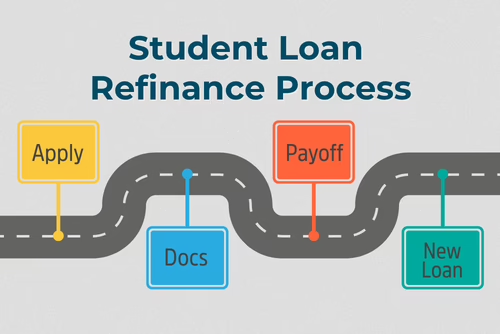
Student loan refinancing involves replacing one or more existing student loans with a new loan, ideally at a lower interest rate. You’ll typically need strong credit and steady income to qualify. When refinancing through a private lender, especially a credit union, you may benefit from lower rates, fewer fees, and member-focused service.
Unlike federal student loan consolidation, which combines federal loans at a fixed rate that is the weighted average of the interest rates on the loans being consolidated, refinancing can actually lower your overall cost of borrowing.
Interest Rates Are Competitive
Although interest rates rose steadily through 2023 and early 2024, they’ve stabilized in 2026. In fact, several private lenders, including credit unions partnered with Student Choice, are still offering highly competitive refinance rates, especially for borrowers with strong credit profiles.
Locking in a lower fixed rate today could save thousands over the life of your loan.
Example: A borrower with $40,000 in student loans at 7.5% interest could refinance at 4.24% and save over $6,600 in interest over a 10-year term.
Use our refinance calculator to estimate your own potential savings.
Signs You’re Ready to Refinance
You may be a strong candidate for refinancing if:
- You have a credit score of 680+
- You’ve built a steady employment history
- Your monthly budget is stable
- You don’t plan to use federal repayment or forgiveness programs
Even if your credit isn’t perfect, applying with a cosigner (like a spouse or parent) can improve your chances of approval and secure a better rate.
Be Cautious If You Hold Federal Loans
Refinancing federal student loans into a private loan means giving up benefits such as:
- Income-driven repayment plans
- Deferment and forbearance flexibility
- Federal student loan forgiveness programs
For some borrowers, such as those pursuing Public Service Loan Forgiveness (PSLF), refinancing may not be worth the tradeoff.
Why Credit Unions Offer a Smarter Refinance Option
Refinancing with a credit union—rather than a big bank or online-only lender—means:
- Lower average interest rates
- Fewer fees or prepayment penalties
- Personalized member support
- Transparent, no-gimmick loan terms
Student Choice partners with trusted credit unions nationwide to offer refinance loans that align with your financial goals—not just the lender’s bottom line.
Explore our student loan refinance solution to see how we’re different.
So… Should You Refinance Now?
If you’re holding high-interest private loans, you’re employed, and you have solid credit—or a strong cosigner—now may be the ideal time to refinance. With competitive credit union rates still available, waiting could cost you in the long run.
But timing isn’t the only factor. The best refinance decision balances savings, stability, and flexibility.
Ready to See Your Options?
Use our credit union refinance comparison tool to check your rate without impacting your credit score. No commitment. Just transparency.
*Important: Please remember that federal loans do offer certain benefits and protections that do not transfer to a private loan. By refinancing your federal student loans to a private loan you will lose any federal benefits that may apply to you. Please review this important disclosure for more information.
Loans subject to credit approval and additional criteria. Carefully consider whether consolidating your existing student loan debt is the right choice for you. Any reduction in your monthly payment may result from a lower interest rate, a longer repayment term, or both. Extending the loan term could increase the total interest paid over time.