If you’re researching paying for college, you’ve probably noticed that interest rates can vary quite a bit from one lender to another. With the recent increase in the prime rate, comparing your options has become even more important.
So, what does that mean if you’re shopping for a student loan?
What Is the Prime Rate?
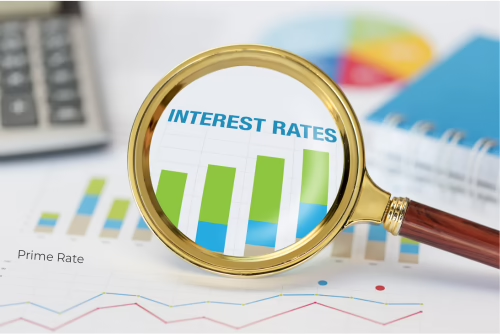
The prime rate is an interest rate used by banks as a benchmark for setting the rates on certain types of loans. When the prime rate changes, the interest rate on loans tied to it can change, too.
On Sept. 16, 2026, the Federal Reserve raised its federal funds rate by 0.25 percentage point, bringing its target range to 3.75%–4%. Following the announcement, many major banks increased their prime lending rate from 6.75% to 7%.
Lenders May Adjust Rates at Different Times
One important thing to keep in mind: not every lender adjusts its rates at the same time when prime changes.
Some lenders may update their rates shortly after a change to the prime rate, while others may adjust rates on a set schedule, such as quarterly. As a result, the rates you’re seeing from different lenders may reflect different timing.
That makes it worthwhile to take another look at the rates different lenders are currently offering. A lender whose rate hasn’t changed yet could look different from one that has already adjusted its rates—and the difference could affect which loan makes sense for your needs.
Compare More Than Just the Advertised Rate
When comparing private student loans, it can be tempting to focus on the lowest advertised rate. But there’s more to consider than the starting number.
Pay attention to:
- Fixed vs. variable rates: A fixed rate stays the same for the life of the loan, while a variable rate can increase or decrease as the underlying index changes.
- Rate range: The rate you actually receive depends on factors such as your credit history and the lender’s pricing criteria.
- Rate discounts: Some lenders offer a discount for enrolling in automatic payments.
- Fees: Look for origination, application and prepayment fees.
- Repayment options: Compare how long you have to repay the loan and when payments begin.
- Rate caps or floors: If you’re considering a variable-rate loan, find out whether there are limits on how high or low your rate can go.
A lower starting rate doesn’t necessarily tell you what the loan will cost over time. Read the details and compare the full terms before choosing a loan.
Don’t Overlook Credit Unions
It makes sense to compare multiple options rather than assuming one lender will have the best fit for your situation. When comparing private student loans, it can pay to look beyond large banks and online lenders. Credit unions offer another option worth exploring.
Credit unions are member-owned financial institutions, and many offer private student loans designed to help members pay for college with competitive rates and flexible repayment options. And their member-focused approach can come with benefits beyond a competitive rate.
A Little Comparison Can Go a Long Way
Interest rates can have a significant impact on how much you pay to borrow for college. And when rates are changing, it’s especially important to keep an eye on what different lenders are offering.
If you need a private student loan, take the time to compare rates, terms and repayment options. A little research now could help you make a more informed decision about how you pay for college.