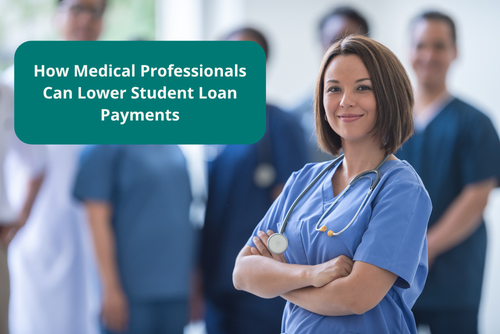
Nurses, teachers, and healthcare workers are among the professionals most affected by student loan debt. Many entered their fields driven by purpose, only to find that loan payments consume a meaningful share of their income for years after graduation.
If you are a working professional in one of these fields, refinancing your student loans may be an option worth evaluating – though it is important to understand when it helps and when other strategies may serve you better.
The Student Debt Picture for These Professions
Nursing programs (BSN, MSN, DNP), education degrees, and allied health programs often require significant borrowing. The challenge is that starting salaries in these fields, while growing, may not always keep pace with the debt levels required to enter them.
For example, a registered nurse with a BSN may have borrowed $30,000 to $60,000 or more depending on the program. A teacher with a master’s degree may carry a similar range. Healthcare workers in specialized roles, such as physical therapists, physician assistants, nurse practitioners, may have balances that reach well into six figures. (For high-balance professionals, see The Doctor’s Guide to Student Loan Refinancing.)
The result is often monthly payments that feel out of proportion to take-home pay, especially in the early years of a career.
How Refinancing Could Help
Refinancing replaces your existing student loan(s) with a new loan from a private lender, ideally at a lower interest rate or with a more manageable repayment term. For professionals in nursing, education, and healthcare, refinancing may offer:
- A lower monthly payment if you refinance into a longer term or qualify for a lower interest rate than your current loans carry.
- Reduced total interest if you refinance at a lower rate while keeping a similar or shorter repayment term.
- Simplified payments if you consolidate multiple loans into one monthly payment with a single servicer.
- Removal of a cosigner if you originally borrowed with a cosigner and now qualify independently.
Credit unions in particular may offer competitive rates for borrowers in stable professional roles. Additionally, some employers offer student loan repayment assistance that can complement a refinancing strategy.
An Important Consideration: Federal Loan Protections
Before refinancing, carefully consider whether you benefit from federal loan programs that would be lost if you refinance with a private lender:
Public Service Loan Forgiveness (PSLF): Nurses, teachers, and many healthcare workers employed by qualifying public service or nonprofit employers may be eligible for PSLF, which forgives the remaining balance after 120 qualifying payments.
To qualify, you must be enrolled in a qualifying repayment plan – typically an income-driven repayment (IDR) plan. If you are on track for PSLF, refinancing with a private lender would permanently disqualify your loans from the program.
Teacher Loan Forgiveness: Teachers who work in qualifying low-income schools for five consecutive years may be eligible for forgiveness of up to $17,500 in federal student loans.
Income-Driven Repayment (IDR): Federal income-driven plans cap your monthly payment based on your income and family size. If your income is low relative to your debt, these plans may offer lower payments than a refinanced private loan would. Be aware, however, that the IDR landscape has changed substantially under the OBBBA – the available plans now depend on when your loans were disbursed, and forgiveness received under IDR plans is now taxable at the federal level following the expiration of a temporary tax exemption at the end of 2025. That tax liability should factor into your overall cost-benefit calculation before deciding whether to refinance.
If you are actively pursuing or benefiting from any of these programs, refinancing your federal loans is generally not recommended. However, if you have already completed a forgiveness program, have private loans that are not eligible for federal programs, or have determined that forgiveness is not the most cost-effective path for your situation, refinancing may be worth exploring. If your loans include graduate school debt, see Refinancing After Grad School for additional considerations.
When Refinancing Makes Sense for These Professions
Refinancing is typically most beneficial for nurses, teachers, and healthcare workers who:
- Have private student loans (not eligible for federal forgiveness programs)
- Have federal loans but have determined that total interest paid under IDR/PSLF would exceed the cost of refinancing
- Have improved their credit score and income since originally borrowing
- Want to pay off loans faster and can handle a shorter repayment term
- Are not employed by a PSLF-qualifying employer
How to Evaluate Your Options
- Calculate your total cost under your current plan. How much will you pay in total (principal plus interest) if you stay on your current repayment path? If you are on an IDR plan with expected forgiveness, factor in the tax treatment of forgiven amounts.
- Get rate quotes from multiple lenders. Many lenders allow you to check rates with a soft credit inquiry that does not affect your score. Compare the rate, term, and monthly payment across options.
- Run the numbers side by side. What would you pay in total under a refinanced loan versus your current plan? What is the monthly payment difference?
- Factor in career plans. If you may transition to a public service employer in the future, then keeping federal loans may be strategically valuable.
Student Choice connects borrowers with credit union lenders who offer student loan refinancing1. Explore current rates to see options that may be available to you.
1Subject to credit qualification and additional criteria, including graduating from an approved school. Savings or lower interest rates are not guaranteed and depend on your individual financial profile, loan terms, and credit history.
*Important: Please remember that federal loans do offer certain benefits and protections that do not transfer to a private loan. By refinancing your federal student loans to a private loan you will lose any federal benefits that may apply to you. Please review this important disclosure for more information.
Loans subject to credit approval and additional criteria. Carefully consider whether consolidating your existing student loan debt is the right choice for you. Any reduction in your monthly payment may result from a lower interest rate, a longer repayment term, or both. Extending the loan term could increase the total interest paid over time.