If you’re making payments on a private student loan, it’s important to keep an eye on interest rates – especially if you have a variable-rate loan. With the recent increase in the prime rate, some borrowers could see changes to their student loan interest rate and monthly payment.
Even if you have other types of student loans, the increase is a good reminder to take a look at your current loan details and explore your refinance options.
How Does the Prime Rate Affect Student Loans?
The prime rate is a benchmark that some lenders use to set interest rates on certain types of loans. Some private student loans have variable interest rates that are tied to the prime rate.
A lender will calculate a variable APR by adding a specific margin to the prime rate (for example, prime + 4%). When the prime rate increases, the APR on a loan tied to that index can increase as well.
That can mean higher interest charges and, depending on the loan’s terms, a higher monthly payment.
If you have a variable-rate private student loan, it’s important to know what index your rate is tied to, how often your rate can change, whether there is a floor/ceiling on your rate (how low or high the rate can go), and whether your monthly payment could change when the rate adjusts.
What About Fixed-Rate Student Loans?
If your student loan has a fixed interest rate, an increase in the prime rate generally won’t change your existing rate or monthly payment. However, if you’ve been considering refinancing, take a careful look at current market rates.
Lenders adjust their rates at different times. Some make changes soon after the Federal Reserve announces a rate update, while others adjust monthly or quarterly. As a result, refinance rates can vary from one lender to another.
Why Consider Refinancing?
A rising prime rate doesn’t necessarily mean refinancing will save you money. In fact, if you’re considering a variable-rate refinance loan, it’s important to understand that future increases in the underlying index could cause that rate to rise as well.
However, refinancing may be worth exploring if your financial situation has changed since you originally borrowed. For example, your credit may have improved, your income may have increased or you may have established a stronger financial history.
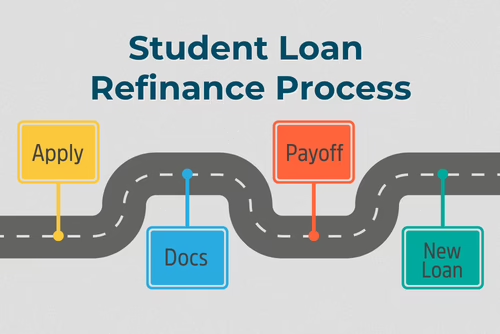
Depending on your situation and the options available to you, refinancing could potentially help you:
- Lower your interest rate and reduce the amount of interest you pay over time
- Lower your monthly payment by securing a lower rate or extending your repayment term
- Pay off your loan sooner by maintaining your current payment with a lower rate
- Simplify your payments by combining multiple eligible loans into one
Keep in mind that extending your repayment term could lower your monthly payment but result in paying more interest over the life of the loan. Additionally, you should carefully consider refinancing any federal student loans, as they come with benefits and protections you will lose by refinancing with a private lender.*
Don’t Wait to Compare Rates
If you’re thinking about refinancing, start by finding out what rates you may qualify for today.
When comparing refinance offers, look at more than the advertised rate. Consider:
- Fixed vs. variable: A fixed rate stays the same for the life of the loan, while a variable rate can change as its underlying index changes.
- The index and margin: For a variable-rate loan, find out which index is used and how much is added to that index to determine your rate.
- Rate adjustment terms: Check how often your rate can change and whether the loan has a cap or limit on rate increases.
- Repayment term: A shorter term could mean higher monthly payments but less interest paid over time.
- Fees: Check for application, origination or prepayment fees.
Consider a Credit Union
If you’re considering refinancing your student loans, don’t overlook credit unions. Because they are not-for-profit, community-focused lenders, you may find more favorable rates and terms with a credit union than some “big box” lenders.
Because rates, terms and eligibility requirements vary by lender, comparing multiple offers can help you find an option that fits your situation.
Take a Fresh Look at Your Student Loans
You can’t control where interest rates go, but you can control how carefully you review your loan options.
With the prime rate moving higher, take a few minutes to review your current student loan. If you have a variable-rate loan, find out what index it’s tied to and how a change in that index could affect your rate and payment. Then compare today’s refinance options to see how they stack up against your current loan.
Refinancing isn’t right for everyone, but understanding your options can help you make a more informed decision about your student loans.
Ready to see what you could qualify for? Explore student loan refinance options from leading credit unions today.
*Important: Please remember that federal loans do offer certain benefits and protections that do not transfer to a private loan. By refinancing your federal student loans to a private loan you will lose any federal benefits that may apply to you. Please review this important disclosure for more information.
Loans subject to credit approval and additional criteria. Carefully consider whether consolidating your existing student loan debt is the right choice for you. Any reduction in your monthly payment may result from a lower interest rate, a longer repayment term, or both. Extending the loan term could increase the total interest paid over time.