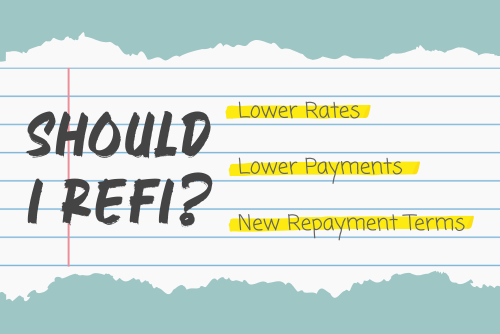
Student loan refinancing replaces one or more existing loans with a new loan, ideally at a lower interest rate or with more favorable terms. It can be a useful tool for some borrowers, but it is not the right choice for everyone.
Before refinancing, it is important to understand what you could gain, what you may give up, and how to determine whether the numbers work in your favor.
What Refinancing Does
When you refinance, a new lender pays off your existing student loan(s) and issues a new loan with its own rate, term, and conditions. The potential benefits include:
- A lower interest rate, which reduces the total cost of the loan
- A different repayment term – shorter to pay off faster, or longer to reduce monthly payments
- Consolidating multiple loans into a single payment to streamline payments
- Removing a cosigner from an existing loan if you now qualify independently
Refinancing is available through private lenders, including credit unions that may offer competitive rates and borrower-friendly terms.
When Refinancing May Make Sense
Refinancing tends to be most beneficial in certain key scenarios:
Your credit profile has improved since you originally borrowed. If you have built a stronger credit history, increased your income, or reduced other debt since taking out your original loans, you may qualify for a meaningfully lower rate than what you are currently paying. For more on eligibility, see What You Need to Qualify for Student Loan Refinancing.
You have high-rate private loans. Borrowers who took out private student loans when interest rates were higher or when they had limited credit may find that current rates available to them are more favorable. Refinancing these loans could reduce monthly payments or total interest.
You have a stable income and emergency savings. Refinancing is a commitment to a new repayment schedule. Having stable income and a financial cushion means you are less likely to need the flexibility that comes with repayment options for federal student loans.
You want to pay off your loans faster. Refinancing into a shorter term increases your monthly payment but can save a meaningful amount in total interest over the life of the loan.
When Refinancing May Not Be the Right Move
Refinancing involves trade-offs, and there are situations where it may not align with your goals:
You rely on federal loan protections. When you refinance federal student loans with a private lender, you lose access to federal benefits, including income-driven repayment plans, Public Service Loan Forgiveness (PSLF), federal deferment and forbearance options, and any future federal relief programs. If you are pursuing PSLF or are in an income-driven plan with a balance you expect to be forgiven, refinancing would eliminate those options.
Your income is uncertain. If you are between jobs, early in a new career, or in a field with variable income, the fixed repayment obligations of a refinanced loan may create risk. Federal income-driven plans adjust with your income, while refinanced loans typically do not.
The rate improvement is minimal. If the new rate would be only slightly lower than your current rate, the cost and effort of refinancing may not be justified, especially if you are early in your repayment and have a small remaining balance.
You have a small remaining balance. If you are close to paying off your loans, the total interest savings from refinancing may not be meaningful enough to warrant the process.
A Framework for Deciding
Walk through these questions to evaluate whether refinancing is right for your situation:
- Are all my loans private, or am I willing to give up federal protections? If your loans are already private, refinancing carries fewer trade-offs. If you have federal loans, weigh the value of federal benefits against the potential interest savings.
- What rate could I qualify for today? Check current rates from multiple lenders. Many offer rate checks with a soft credit inquiry that does not affect your credit score. Compare the new rate to your current weighted average rate.
- How much would I save? Calculate the total interest you would pay under your current loans versus a refinanced loan at the new rate and term. The difference is your potential savings.
- Can I comfortably afford the new monthly payment? If you refinance into a shorter term to save on interest, then make sure the higher payment fits your budget. If you refinance into a longer term for a lower payment, recognize that you may pay more in total interest.
- Is my income stable enough? Without federal safety nets, your ability to make consistent payments relies on steady income.
How to Get Started
If you determine that refinancing could work for you, compare offerings from several lenders. Credit unions, in particular, may offer competitive rates with borrower-friendly terms.
Student Choice connects borrowers with credit union lenders who offer student loan refinancing1. You can explore current rates to see what options may be available based on your profile.
1Subject to credit qualification and additional criteria, including graduating from an approved school. Savings or lower interest rates are not guaranteed and depend on your individual financial profile, loan terms, and credit history.
*Important: Please remember that federal loans do offer certain benefits and protections that do not transfer to a private loan. By refinancing your federal student loans to a private loan you will lose any federal benefits that may apply to you. Please review this important disclosure for more information.
Loans subject to credit approval and additional criteria. Carefully consider whether consolidating your existing student loan debt is the right choice for you. Any reduction in your monthly payment may result from a lower interest rate, a longer repayment term, or both. Extending the loan term could increase the total interest paid over time.