You walked across the stage, received your diploma, and now reality is setting in: student loan repayment is around the corner. If you graduated in spring or summer, your grace period on federal loans is likely ending this fall, and you may already be receiving notices from your loan servicer.
This transition is an opportunity to evaluate your repayment strategy – our College Class of 2026 guide covers key steps to take before summer ends – and consider whether refinancing could improve your financial position.
Where to Start: Assess Your Current Loans
Before considering any changes, build a clear picture of your existing student loans:
- Total balance across all loans (federal and private)
- Interest rates for each loan
- Loan servicer(s) and their contact information
- Monthly payment amounts under the standard repayment plan
- Repayment timeline – when payments begin and how long repayment will take
For federal loans, studentaid.gov provides a complete summary. For private loans, check directly with the loan servicer that manages the billing and payments for the student loan.
What Refinancing Offers Recent Graduates
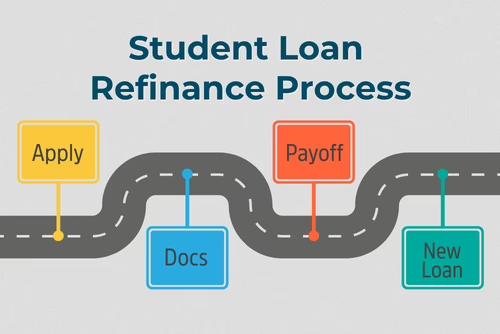
Student loan refinancing involves taking out a new loan from a private lender to pay off one or more existing student loans. The goal is typically to secure a lower interest rate, adjust the repayment term, or simplify multiple loans into one.
For recent graduates, refinancing may be appealing because:
You have a new income. When you originally borrowed, you may have had limited or no income. Now that you are earning a salary, your debt-to-income ratio and overall financial profile may qualify you for a more favorable rate than what you originally received.
Your credit may have improved. If you have been building credit through responsible use of a credit card, car payment, or other accounts, your improved credit score could unlock lower rates.
You want to reduce your rate. If your existing loans carry rates that are higher than what is currently available to you, refinancing at a lower rate reduces the total interest you pay over the life of the loan.
You want to consolidate. If you have multiple loans with different servicers and payment dates, refinancing can combine them into a single monthly payment, making it easier to stay organized. For borrowers with especially large balances, see Six-Figure Student Debt: A Refinancing Playbook.
What to Consider Before Refinancing Federal Loans
If any of your loans are federal, refinancing converts them into a private loan. This means you would lose access to:
- Income-driven repayment (IDR) plans
- Public Service Loan Forgiveness (PSLF)
- Federal deferment and forbearance options
- Any future federal relief programs
If you are planning to pursue PSLF, work in public service, or anticipate needing income-based payment flexibility, keeping your federal loans in the federal system may be the better path.
However, if you have a stable income, are not pursuing forgiveness, and can secure a meaningfully lower rate, refinancing some or all of your loans could make financial sense.
Refinancing Your Private Loans
If you have private student loans, student loan refinancing involves fewer trade-offs since private loans do not carry federal protections. If you can qualify for a lower rate than your current private loans, refinancing is generally worth evaluating.
Some points to compare:
- Interest rate: Fixed or variable? What rate can you qualify for now?
- Repayment term: A shorter term means higher payments but less total interest. A longer term lowers payments but costs more over time.
- Fees: Many lenders charge no origination or prepayment fees, but it’s always important to check the fine print.
- Cosigner release: If your current loan has a cosigner, refinancing into a new loan in your name only could release them from the obligation.
How to Approach Refinancing as a Recent Graduate
- Check your rate. Many lenders let you see estimated rates with a soft credit inquiry, which does not affect your credit score. Compare offers from several lenders, including credit unions.
- Calculate total savings. Do not just compare monthly payments. Calculate the total amount you would pay over the full life of each loan – your current loan versus the refinanced option.
- Decide on a term. Choose a repayment term that aligns with your budget and goals. If paying off debt quickly is a priority, a shorter term saves on interest. If cash flow is tight in your early career, a longer term provides breathing room.
- Apply with the lender that offers the best terms for your personal situation. Once you have compared options, submit a full application. Approval and funding typically take a few weeks.
Student Choice connects borrowers with credit union lenders offering student loan refinancing1. Explore current rates to see if refinancing could be a good choice for you.
1Subject to credit qualification and additional criteria, including graduating from an approved school. Savings or lower interest rates are not guaranteed and depend on your individual financial profile, loan terms, and credit history.
*Important: Please remember that federal loans do offer certain benefits and protections that do not transfer to a private loan. By refinancing your federal student loans to a private loan you will lose any federal benefits that may apply to you. Please review this important disclosure for more information.
Loans subject to credit approval and additional criteria. Carefully consider whether consolidating your existing student loan debt is the right choice for you. Any reduction in your monthly payment may result from a lower interest rate, a longer repayment term, or both. Extending the loan term could increase the total interest paid over time.